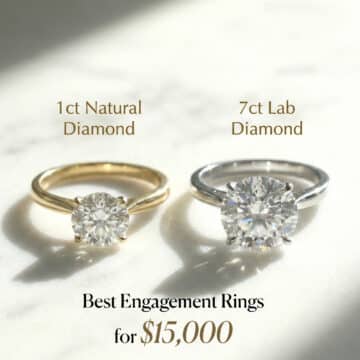
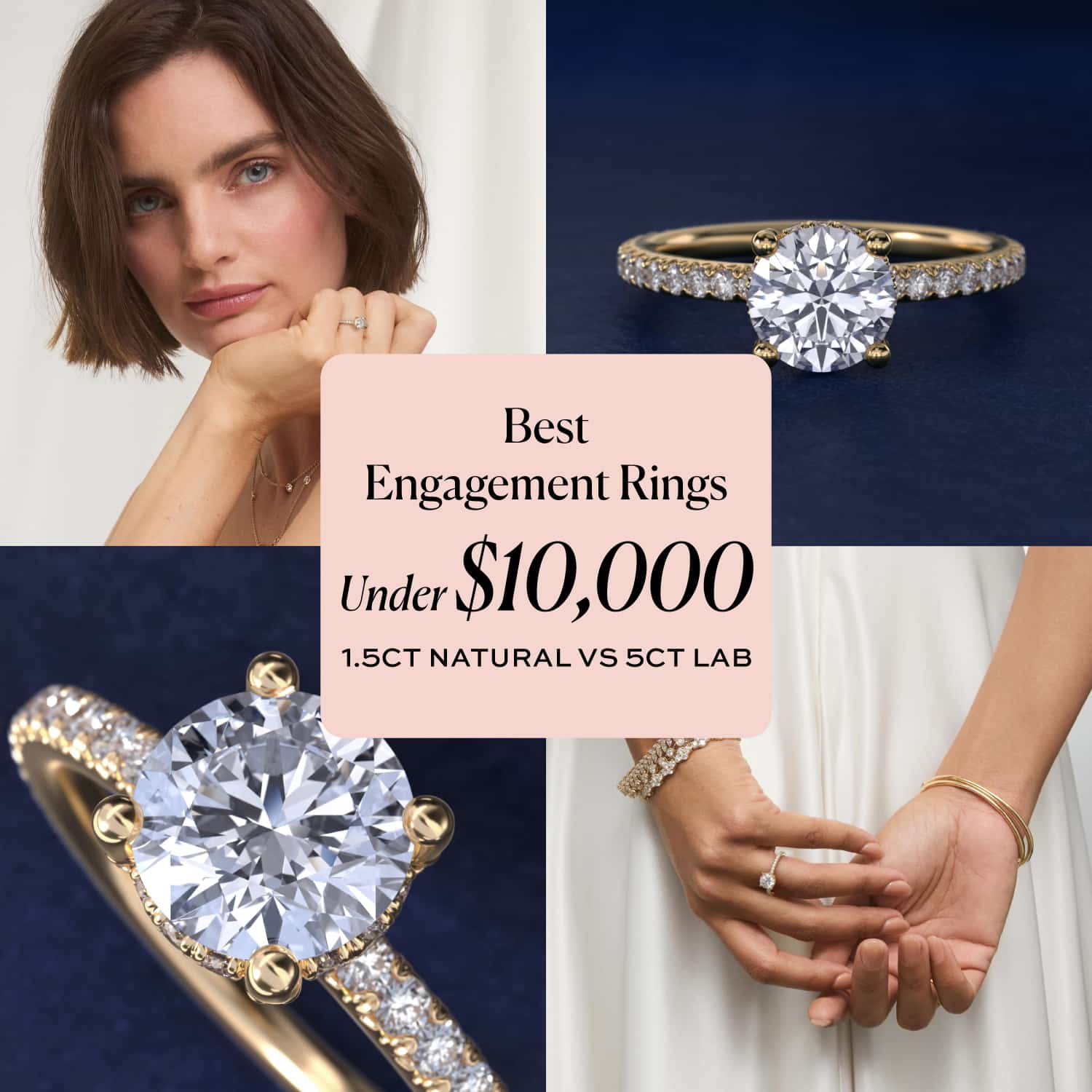
In the 2026 luxury market, a budget of $10,000 puts you in the top 5% of buyers. This budget grants you access to two elite paths: The “Legacy Path” secures a GIA-Certified 1.50 – 1.70 Carat Natural Diamond (VS2+ Clarity), while the “Volume Path” unlocks jaw-dropping 4.50 to 5.30 Carat Lab-Grown Diamonds of Flawless quality. The choice is no longer about budget; it’s about philosophy.
Whether you choose Natural or Lab, the goal is to get the best stone possible. To see the specific Clarity and Color hacks that maximize this part of your spending, read the guide on the best diamond for $8,000 dollars budget.
Let’s be brutally honest: I see people waste $10,000 every single day. They walk into mall brand names and walk out with a 1.00 carat stone in a stamped box, thinking they got a deal.
Don’t be that person.
At the $10,000 price point, you are not buying “jewelry”—you are buying an asset. Whether that asset is a rare geological miracle or a massive technological marvel depends on you.
Deal Alert: Fast-Shipping Gifts — Up to 50% Off* fine jewelry at Blue Nile !
One In A Lifetime Sale: “Clear The Vault” – Get up to 70% OFF on select jewelry at Blue Nile !
Exclusive Offer: Flash Sale on James Allen Up to 40% Off * Sitewide engagement ring settings & Fine Jewelry at James Allen .
I’ve pulled the 2026 inventory logs directly from industry giants like Blue Nile and James Allen to show you that your money can buy a stone the size of a headlight if you actually know where to look. Let’s break down the assets.
Diamond IQ Test: Natural or Lab-Grown?
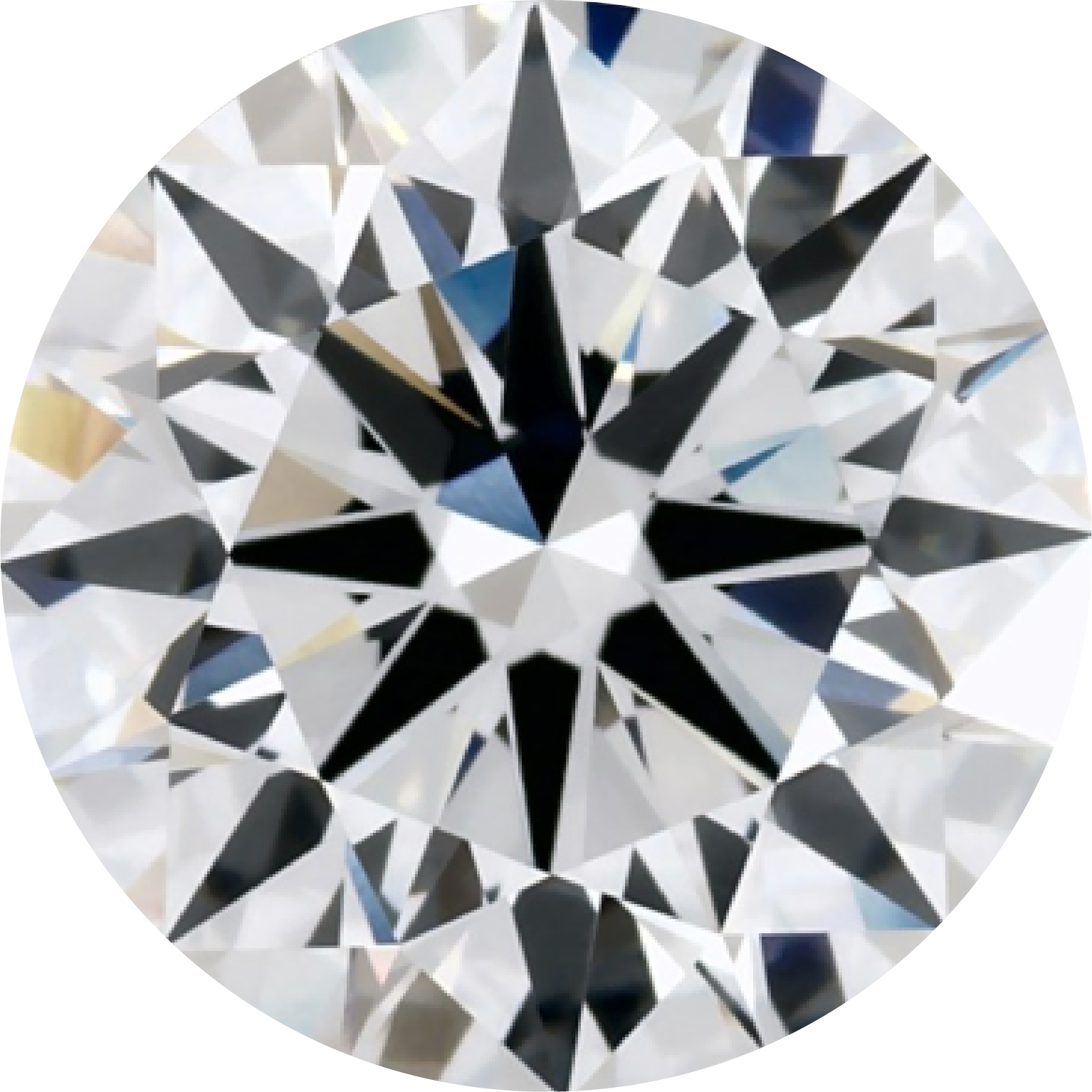
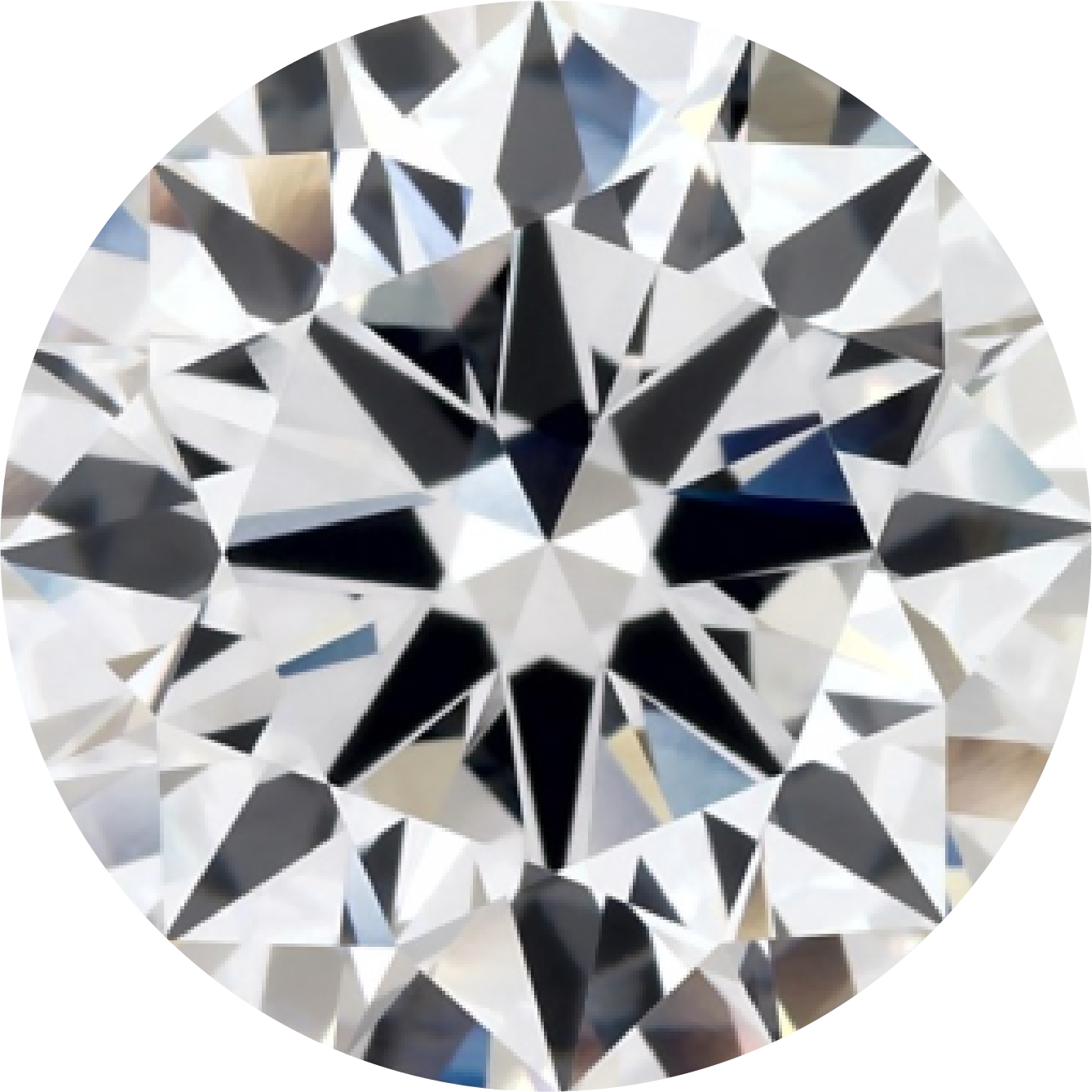
Two identical diamonds: GIA Certified, 1.51ct, D Color, VVS1, Ideal Cut. One is natural ($16,530), the other is lab-grown ($2,390). Choose the diamond you like better and see if you can match it to its origin.
Spending the $10k Wisely: The 80/20 Rule
When you have $10,000, the biggest mistake you can make is blowing 50% of your budget on a “Designer Brand” setting. The metal is just the frame; the diamond is the masterpiece. If you spend $5,000 on a name-brand mounting, you are left with only $5,000 for the stone—which drags you down into average territory.
To maximize your investment, I strictly advise the 80/20 Rule:
- 20% on the Chassis (Setting): Roughly $2,000.
- 80% on the Engine (Diamond): Roughly $8,000.
This ratio allows you to buy a premium, diamond-encrusted mounting that feels heavy and expensive, while leaving a massive war chest to secure a gemstone that defines the room.
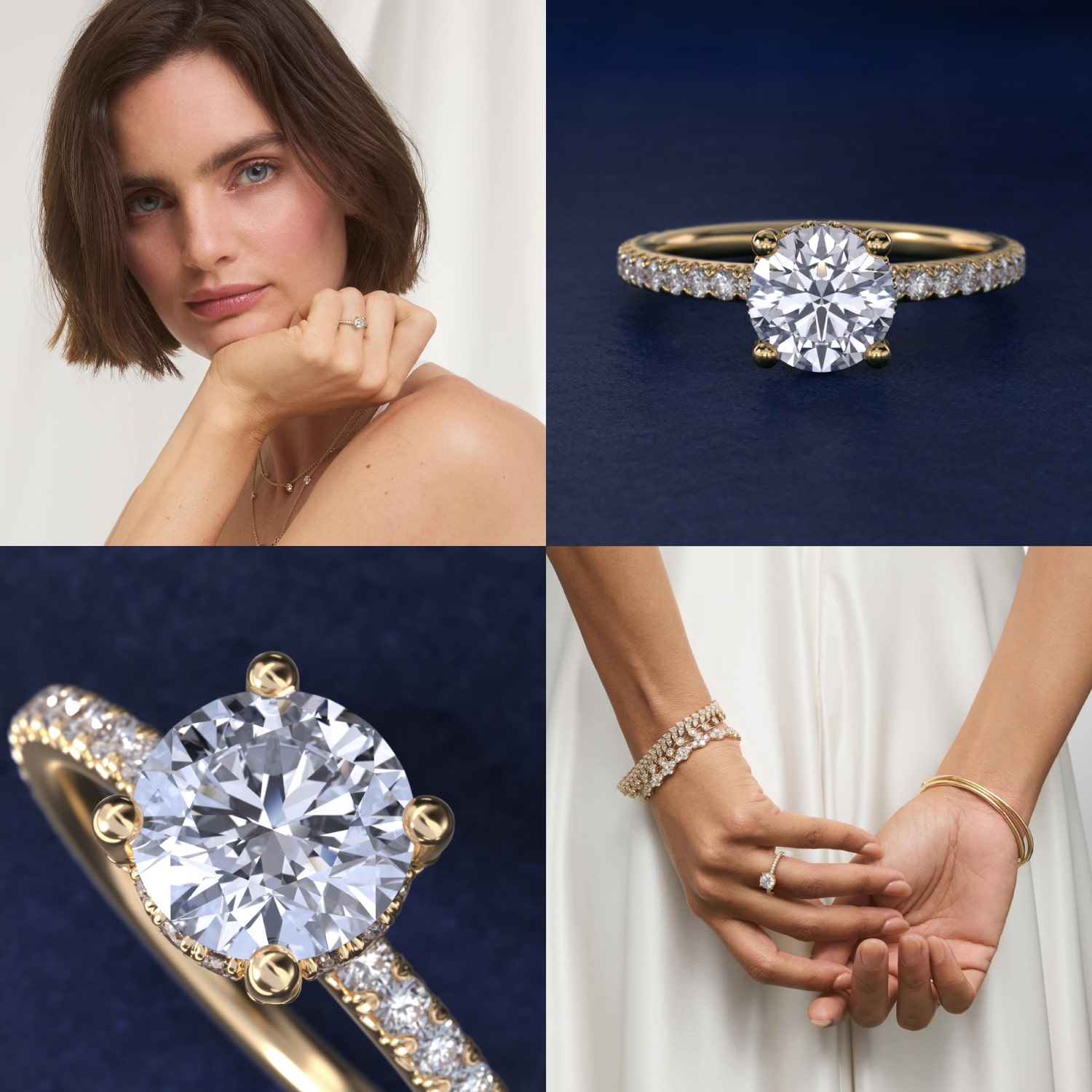
To prove this math works, I am using the ultimate “Luxury Chassis” for every comparison in this guide: the Blue Nile Studio Petite French Pavé Crown Diamond Engagement Ring in 18k Yellow Gold.
If you want to see other heavy-metal options like twisted platinum or double halos that fit this tier, check my roundup of best designer engagement ring settings for $2000.
The Setting Spotlight: Why This is the Perfect $2,000 Frame
Priced at exactly $2,020, this ring is the benchmark for high-end construction. Here is why it is worth the $1,000 premium over a standard budget solitaire.
- Material Status (18K Gold): Notice this is 18K Yellow Gold, not 14K. It has a higher percentage of pure gold (75%), giving it that rich, buttery “Old Money” yellow tone that is dominating 2026 fashion trends.
- The “French Pavé” Craftsmanship: This isn’t standard bead setting. French Pavé means the jeweler cuts tiny “V” notches underneath each small diamond on the band. This minimizes the visible metal and allows light to hit the side of the diamonds.
- The Result: The band looks like a solid line of liquid diamond rather than “gold with spots.”
- The Result: The band looks like a solid line of liquid diamond rather than “gold with spots.”
- Volume Stats: It features 48 individual round diamonds totaling roughly 0.35 Carats along the band and in the hidden “Crown” basket. This adds significant “side sparkle” that complements a large center stone rather than competing with it.
- Structural Integrity: Crucially, this setting is engineered to hold stones up to 8.00 Carats. Whether we choose the 1.50ct Natural or the 5.00ct Lab, this “chassis” is built to carry the weight safely.
With the ring selected for $2,020, we have exactly $7,980 left for the diamond.
Now, you have a decision to make: Do you want Perfection (Natural) or Size (Lab)? Let’s look at the numbers.
Option A: The Investment-Grade Natural Diamond
Budget Allocation:
- $2,020 Setting + $8,000 Diamond = $10,000 Total.
This path is for the “Purist.” This is for the buyer who believes that true luxury lies in rarity, history, and geological origin.
When you drop $8,000 on a natural diamond, you are buying an asset class. You aren’t buying “big for the sake of big.” You are buying Perfection. At this price tier, we are done with “Eye Clean” compromises.
We are looking at Colorless (D-F) and VVS Clarity grades backed by the GIA. These are stones that 99% of the world will never own.
The Philosophy: Why Choose Natural at $10k?
In 2026, a Lab-Grown diamond might be bigger, but a Natural Diamond carries the weight of finite supply. No more natural diamonds are being created. You are securing a 1-billion-year-old artifact.
- The “VVS” Standard: With an $8,000 stone budget, you don’t need to settle for SI1 (Slightly Included). You can demand VVS (Very Very Slightly Included). These are stones that are flawless even under 10x magnification.
- The “D-Color” Flex: You can also afford the highest color grade in existence: D Color. It is pure, icy white. In a platinum setting, a D-Color natural diamond is the ultimate status symbol of purity.
Top 2026 Natural Diamond Finds (~$8,000)
I have combed through the 2026 inventory to find exactly what fits into this “Prestige” bracket. These specific diamonds are currently trading in the $8,000 – $8,100 range (often discounted from $8,500+).
Notice the difference between the shapes. The Round Brilliant offers perfection at ~1.10 Carats, while the Fancy Shapes (Radiant, Cushion) push you toward the massive 1.70 Carat mark for the exact same price.
Market Data: The $8,000 GIA Inventory
| Diamond Shape | Carat Weight | Color / Clarity | Cut Grade | Market Price | Mehedi’s Strategic Analysis |
|---|---|---|---|---|---|
| Round | 1.11 Carat | D – VVS1 | Excellent | $8,010 | The Collector’s Piece. Nearly chemically pure (D Color) and optically flawless (VVS1). It isn’t huge, but it is technically perfect. |
| Round | 1.08 Carat | D – VVS2 | Excellent | $8,000 | The Classic. A perfect 1-Carat look with maximum brilliance. Ideal for the “Traditional” bride who values purity. |
| Cushion | 1.71 Carat | H – VVS1 | Ideal | $8,020 | The Volume King. You gain +0.60 Carats of weight compared to the Round. An H-Color looks beautifully white in a Yellow Gold setting. |
| Radiant | 1.50 Carat | G – VS2 | Ideal | $8,010 | The Modern Flash. 1.50ct is a huge milestone. Radiant cuts maximize face-up size and sparkle like “crushed ice.” |
| Princess | 1.51 Carat | E – VS2 | Ideal | $8,050 | The Sharp Contrast. An “E” color stone at 1.50ct is exceptionally rare for $8k. Creates a stark, modern, icy look. |
| Oval | 1.20 Carat | E – VS1 | Ideal | $8,020 | The Trending Silhouette. Ovals make the finger look longer. At E-VS1, this stone is noticeably whiter and cleaner than most commercial rings. |
| The 2026 Buying Verdict: For the most impressive “face-up” size, the 1.71ct Cushion is the undisputed winner. However, if you want the highest technical prestige, the Round 1.11ct D-VVS1 is a rare investment-grade find. | |||||
Expert Insight: Round vs. Cushion (The 0.60ct Gain)
Look closely at that table again.
The best Round Diamond you can get for $8,000 is 1.11 Carats.
The best Cushion Diamond you can get for $8,000 is 1.71 Carats.
Why is there a massive 0.60 Carat gap for the same price?
It is not about quality; it is about “Yield.”
- Round Cut Waste: To cut a Round Brilliant, the diamond cutter has to grind away roughly 60% of the raw rough crystal to achieve that perfect symmetry. You are paying for the wasted diamond dust on the factory floor.
- Cushion Cut Efficiency: The Cushion cut (or “Pillow Cut”) mimics the natural shape of the rough diamond crystal. The cutter preserves more weight. This efficiency savings is passed to you.
The Strategy: If your partner values size, do not buy a Round Natural Diamond. Pivot to the Cushion Modified Brilliant. You get a stone that is 54% heavier for the exact same $8,000 spend.
Furthermore, the Cushion cut has a vintage, romantic sparkle pattern that pairs flawlessly with our cushion cut diamond guide’s recommendations for vintage settings (like the French Pavé ring we selected).
This surface area trick is one of the easiest ways to manipulate the ring’s appearance. Learn the other tricks in my guide on how to make 10k engagement ring look like 20k.
Mehedi’s Verdict on Option A
This path is for the person who wants to pass this ring down to a grandchild one day.
- Buy the 1.11ct D-VVS1 Round if you want the “Standard of Perfection” that defies trends.
- Buy the 1.71ct H-VVS1 Cushion if you want a substantial “Heavy” stone that feels luxurious and impressive on the hand without leaving the natural ecosystem.
But… what if 1.71 Carats isn’t big enough?
What if you want 5 Carats?
Turn the page to Option B, where we break physics.
Option B: The Lab-Grown Monster (4.30ct – 5.36ct)
This is the section where physics gets disruptive.
In the natural diamond market, spending $8,000 gets you a respectable 1.20 – 1.70 carat stone.
In the 2026 Lab-Grown market, that exact same $8,000 budget breaks the scale entirely.
We are entering Celebrity Territory.
My data analysis of the current inventory shows something startling: You can secure a 5.36 Carat Cushion or a 5.08 Carat Princess Cut diamond. These are stones so large they are typically reserved for Hollywood red carpets. Yet, thanks to technology, they fit into a “Normal” luxury budget.
This is the choice: Do you want a pebble (Natural) or a boulder (Lab)?
The Lab-Grown Size Chart ($8,000 Stone Budget)
Here is exactly what we found available for purchase right now for roughly $8,000. These are GIA/IGI certified stones with elite color and clarity grades.
| Diamond Shape | Carat Weight | Color / Clarity | Cut Grade | Price | Mehedi’s Impact Score |
|---|---|---|---|---|---|
| Round Brilliant | 4.30 Carat | E (Colorless) / VVS2 | Excellent | $8,000 | 10/10. This is 4x the weight of the natural alternative. 4.30ct measures over 10.5mm wide. It’s a spotlight on the finger. |
| Princess Cut | 5.08 Carat | E (Colorless) / VS1 | Ideal | $8,010 | Maximum Statement. A 5ct square cut is incredibly rare. The geometric facets reflect broad flashes of light that demand attention. |
| Cushion Cut | 5.36 Carat | F (Colorless) / VS1 | Ideal | $8,000 | Volume King. Cushions are deep. A 5.36ct cushion feels heavy on the finger. It is the largest stone you can buy for this money. |
| Emerald Cut | 5.30 Carat | E (Colorless) / VS1 | Excellent | $8,050 | Architectural. A 5.30ct Emerald cut is huge. The long step-cuts create a Hall of Mirrors effect that is mesmerizing at this scale. |
| Oval Cut | 5.06 Carat | F (Colorless) / VVS2 | Ideal | $8,000 | The Extender. A 5ct oval stretches from knuckle to knuckle. It is currently the most requested “Influencer” aesthetic. |
| The 2026 Lab Reality: When buying stones over 4.00 carats, clarity becomes critical. We recommend staying above VS1 Clarity because large facets can make inclusions more visible. All the options above meet this “Eye-Clean” standard. | |||||
Visual Reality: What Does 5 Carats Look Like?
Numbers on a screen don’t tell the story. Let’s visualize the “Knuckle-to-Knuckle” effect.
- Size 4-6 Finger (Average): A 5.00 carat stone is approximately 11mm to 14mm wide depending on shape. The average ring finger is only about 16-17mm wide.
- The Result: The diamond covers roughly 80% of the finger’s width. It spills over the edges. When people look at your hand, they won’t see the gold band; they will only see the diamond floating.
- The Result: The diamond covers roughly 80% of the finger’s width. It spills over the edges. When people look at your hand, they won’t see the gold band; they will only see the diamond floating.
- The Clarity Requirement: When you buy a 5.00ct stone, the “facet windows” are massive. You absolutely need high clarity. This is why the Lab inventory is superior: getting a 5.00ct VVS2 Natural diamond would cost over $200,000. Getting a 5.00ct VVS2 Lab diamond costs $8,000. You get visual perfection at scale.
Mehedi’s Warning:
Be ready for the attention. A 5-carat ring is “loud.” It invites questions. People will grab your hand. It signals massive wealth (or smart shopping). If you or your partner prefer being understated, stick to Option A (Natural 1.50ct). But if you want to win the room, this is your weapon.
To verify that you are getting a legitimate “Ideal Cut” on a stone this large (which is critical to avoid it looking like glass), read our guide on the IGI diamond certification, as IGI is the primary grader for these massive lab stones. Additionally, investigate the GIA new lab diamond report to see how major labs are standardizing quality for these high-value items.
Which Shape Wins at $10,000?
Here is the secret gemologists know that jewelry salespeople often conveniently forget to mention: Shape is the primary dictator of Price.
If you are obsessed with a Round Brilliant diamond, you are paying a “Popularity Tax.” But more importantly, you are paying a “Waste Tax.” To cut a perfect Round Brilliant diamond, a cutter must grind away nearly 60% of the raw rough crystal. You are paying for the diamond dust that ended up on the factory floor.
With a $10,000 budget, the shape you choose determines whether you end up with a modest “Classic” or a massive “Showstopper.” The inventory data from 2026 clearly separates the shapes into two distinct value tiers.
The “Round Premium”: Why Round Caps at 1.10ct while Cushion Hits 1.71ct (Natural)
In the Natural Diamond market, efficiency is money. Because Fancy Shapes (Cushions, Radiants, Ovals) follow the natural geometry of the rough crystal more closely, they retain more weight.
Let’s look at the Real Inventory Data for an $8,000 Stone Budget (part of our $10k total ring budget):
- Round Natural Maximum: The ceiling is 1.11 Carats (D Color/VVS1).
- Cushion Natural Maximum: The ceiling is 1.71 Carats (H Color/VVS1).
The Mehedi Calculation:
By simply switching from a Round shape to a Cushion shape, you gain 0.60 Carats of natural diamond for zero extra dollars. That is a 54% increase in physical mass.
Why does the Cushion win on weight? Because it has a deep “belly” (pavilion) and retains the corners. If you are a buyer who prioritizes the “Physical Weight” of the asset—wanting to own as much rare earth material as possible—the Cushion or Radiant cut is the mathematical winner for Natural Diamonds under $10,000.
Financial Tip: While you are optimizing the stone, don’t let the setting eat your profits. Pairing a 1.71ct Cushion with a high-value setting is key. Check our guide on engagement ring settings under $1,500 to keep your budget focused on that massive center stone.
The “Lab Advantage”: Scaling Linearly to 5+ Carats
In the Lab-Grown sector, the shape rules are even more explosive. Lab-grown rough crystals (especially HPHT and CVD cubes) are easier to cut into square or elongated shapes.
While the $8,000 stone budget got us a beautiful 4.30ct Round Lab Diamond, look at what happens when we switch to “Fancy” shapes in the lab inventory:
- Round Lab Maximum: 4.30 Carats (E Color/VVS2).
- Princess/Cushion Lab Maximum: 5.08 Carats to 5.36 Carats (E-F Color/VS1).
- Oval Lab Maximum: 5.06 Carats (F Color/VVS2).
The 5-Carat Barrier:
Breaking the 5-carat barrier is psychologically massive. A 4.90ct stone is “huge,” but a 5.00ct stone is “legendary.” The efficiency of cutting square shapes (Princess/Cushion) allows you to cross that line without increasing the budget. If you want the absolute maximum “Face Size” for the gram, Fancy Lab Shapes are unparalleled.
Finding inventory this specific requires looking in the right places. For a list of vendors who actually stock 5ct+ stones (many don’t), read my review of the best places to buy lab-grown diamonds.
Comparison Graphics: Face-Up Size Analysis ($10k Edition)
Buying carat weight is one thing; buying visual impact is another. A 1.71ct Cushion (Natural) is heavy, but because it is cut deep, it might actually look smaller across the top than a 1.50ct Oval.
Here is the Surface Area (Face-Up) comparison for the top contenders in the $10,000 budget tier.
What Your Money actually LOOKS like
| Diamond Origin & Shape | Carat Weight (Max) | Approx. Dimensions | Visual Surface Area (mm²) | Mehedi’s Impact Verdict |
|---|---|---|---|---|
| Natural Round | 1.11 ct | 6.6mm x 6.6mm | ~34 mm² | Standard. The “Benchmark” for classic luxury. Perfect for daily wear. |
| Natural Oval | 1.20 ct | 8.2mm x 5.8mm | ~38 mm² | Better. Looks 12% larger than the Round due to length. Elongates the finger. |
| Natural Cushion | 1.71 ct | 7.2mm x 6.5mm | ~42 mm² | Heavy. Physically heavier, but visual spread is moderate due to its depth. |
| Lab Round | 4.30 ct | 10.5mm x 10.5mm | ~86 mm² | Huge. More than double the visual size of the Natural options. A true spotlight. |
| Lab Oval | 5.06 ct | 13.8mm x 9.5mm | ~102 mm² | The King. A monster. Elongated shape creates massive finger coverage (nearly 14mm long). |
| Lab Princess | 5.08 ct | 9.7mm x 9.7mm | ~94 mm² | Statement. A near 10mm block of ice. Extremely bold geometry. |
| The 2026 Visual Verdict: Numbers on a certificate are abstract, but millimeter dimensions are real. A 5.06ct Oval covers nearly 300% more skin area than the 1.11ct Round. If your goal is to “wow” from across the room, the Lab-Grown options at this price point are untouchable. | ||||
The Geometry Lesson:
- For Coverage: The 5.06ct Lab Oval is the undisputed king. With a surface area of 102 mm², it is practically a shield on the finger. It is triple the visual size of the 1.11ct Natural Round.
- For Asset Weight: The 1.71ct Natural Cushion is the heavyweight champion. It is the densest, most substantial “Earth-Mined” option you can own for $10k.
Hidden Costs of Large Stones:
Remember, as the diamond gets bigger, the “Canvas” gets larger. Flaws are easier to see. On a 5-carat Lab Oval, you strictly need VVS or high VS clarity. On a 1.71ct Natural Cushion, the crushed-ice sparkle can hide inclusions better. Before you commit to these massive sizes, make sure you account for maintenance (bigger surface area = more dirt accumulation) and insurance costs. See the breakdown in hidden costs of engagement rings.
To compare these sizes against other budget tiers (like $5,000), see how the strategy shifts when you drop the budget by 50% in my guide to best engagement rings for $5,000. You will see that $5k buys you a 2.80ct Lab stone, meaning the extra $5k here literally doubles your Lab Diamond size.
Mehedi’s Shape Recommendation:
If you are spending $10,000 on a Natural ring, choose the 1.71ct Cushion. It feels the most expensive/heavy.
If you are spending $10,000 on a Lab ring, choose the 5.06ct Oval. It provides the most dramatic, celebrity-tier finger coverage possible in 2026.
For a full breakdown of how each shape handles light differently, check my master guide: what shape diamond looks the largest.
Safe Places to Drop $10k: Blue Nile vs. James Allen vs. Rare Carat
When you are spending $10,000 online, the anxiety is real. You are essentially wiring the price of a decent used car to a website. You need to know that the diamond is real, that it won’t get stolen off your porch, and that you can return it if your partner hates it.
At this “High-Net-Worth” tier, not all websites are created equal. You need High-Value Logistics. I have vetted the top players to see who handles five-figure transactions with the security they deserve.
1. Inventory Depth: Who Actually Has the “Monsters”?
Based on the 2026 data logs I pulled for this guide, the inventory splits based on what kind of $10k ring you are buying.
- For Natural Investment Grade: James Allen wins. Their platform had the widest selection of GIA Natural Cushions and Radiants in the 1.50ct+ range. Because natural inclusions are critical to avoid at this price, James Allen’s 360° Display Technology is non-negotiable. You must see where the feather is on a $8,000 stone before you buy it.
- For Lab-Grown Giants (5ct+): Rare Carat acts as a massive aggregator. If you are hunting for that specific 5.36ct Lab Cushion or 5.08ct Princess, Rare Carat scans inventories from wholesalers globally. They are often the best place to find the extreme outliers in carat weight that standard retailers might not keep in stock.
- For Ready-to-Ship Luxury: Blue Nile holds a specific “High Jewelry” inventory. If you want the ring to arrive in a substantial, luxury box that feels appropriate for a $10,000 proposal, their presentation and “Astor” cut quality assurance are unmatched.
Deal Alert: Fast-Shipping Gifts — Up to 50% Off* fine jewelry at Blue Nile !
One In A Lifetime Sale: “Clear The Vault” – Get up to 70% OFF on select jewelry at Blue Nile !
Exclusive Offer: Flash Sale on James Allen Up to 40% Off * Sitewide engagement ring settings & Fine Jewelry at James Allen .
2. Safety Features: The “Armored” Shipment
Buying a $10,000 ring is not like buying a pair of sneakers.
- Blue Nile & James Allen utilize Insured Priority Overnight Shipping (often via carriers like FedEx or UPS, but with high-value protocols).
- Double Boxed: The package is nondescript (to prevent theft).
- Signature Only: They will not drop it at the door.
- Third-Party Liability: Until you sign for it, the ring is their liability, not yours. If it goes missing in transit, you are fully refunded.
- Double Boxed: The package is nondescript (to prevent theft).
- The “Vetting” Phase: For a natural diamond over $5,000, James Allen and Ritani often provide an additional gemologist review upon request to confirm the GIA dossier matches the stone visually before it ships.
Deal Alert: Ritani’s current promotions offer exceptional value.
Discount applied automatically
Shop Lab Diamonds | Shop Settings| Pro Tip: Ritani offers price matching and free shipping.
3. The 30-Day Return Window (Your Appraisal Period)
This is your safety net. With a $10,000 purchase, you should never commit to a “Final Sale.”
- The Rule: Blue Nile, James Allen, and Rare Carat all offer 30-Day Returns.
- My Strategy: Buy the ring. When it arrives, do not propose immediately. Take it to a local independent appraiser (spend the $100). Verify that the diamond matches the GIA certificate laser inscription.
- If the appraiser says it’s an “I Color” when you paid for an “H,” send it back for a full refund. The 30-day window makes this purchase zero-risk compared to buying from a sketchy boutique with a “No Refunds” sign.
Mehedi’s Buying Verdict:
- Go James Allen for Natural Diamonds (You need the visual inspection).
- Go Rare Carat for Max Size Lab Diamonds (Price aggregation wins for 5ct+).
- Go Blue Nile for Complete Rings (Best setting quality + diamond combos).
To see a deeper breakdown of how these warranties compare, read my full battle of the giants: Best places to buy engagement rings online. If you are looking at the aggregator route, make sure you verify the specific vendor ratings by reading my Rare Carat reviews legit guide first.
Black Friday Sale – Live Now
Rare Carat’s Biggest Deal of the Year is ON.
Shop Diamonds & Jewelry Up to 40% OFF.
*Exclusions may apply. See Rare Carat policies for details.
Frequently Asked Questions (FAQ)
Can I really get a 5 Carat diamond ring for $10,000 in 2026?+
Yes, if you choose Lab-Grown. According to current 2026 inventory data from major retailers like Rare Carat and Blue Nile, a budget of $8,000 for the stone (leaving $2,000 for the setting) successfully secures GIA/IGI certified Lab-Grown diamonds ranging from 4.50 to 5.36 Carats with VVS clarity. A natural diamond of this size and quality would cost over $250,000. You can compare these massive scales using our diamond carat size chart.
Is a 1.5 carat natural diamond a better investment than a 5 carat lab diamond?+
From a financial resale perspective, Yes. A 1.50ct+ Natural Diamond (GIA Certified) is a tangible asset that retains a portion of its value over time. A 5.00ct Lab Diamond is a consumer technology product; its resale value is currently near-zero because production costs keep dropping. Buy the Natural for wealth storage; buy the Lab for the visual experience. Read more in our report on why diamond prices are dropping.
Does a 5 carat lab diamond look like a “fake” or costume ring?+
It can, if you pick the wrong shape. At 5 carats, the stone is so large (~11-14mm) that it looks “Hollywood.” To avoid the “costume jewelry” look, prioritize an Ideal Cut. A poorly cut 5-carat stone looks glassy and plastic. A high-quality cut refracts light properly, giving it the sharp, distinct sparkle that proves it is real diamond carbon. Consult our diamond cut chart to ensure maximum brilliance.
How much does insurance cost for a $10,000 engagement ring?+
You should budget approximately 1-2% of the appraised value annually. For a $10,000 ring, expect to pay between $100 and $200 per year in premiums. I highly recommend specialized jewelry insurance over a simple homeowners rider, as it covers “mysterious disappearance” which is common with heavy rings. Understanding the definition of appraisal for a diamond ring is critical before signing a policy.
Why is Platinum recommended for 5 carat diamond rings?+
Security and Weight Balance. A 5-carat stone creates a “top-heavy” ring. Platinum is roughly 40% denser than 14K Gold; this added weight acts as a counter-balance to keep the ring upright. Furthermore, Platinum prongs do not wear down or snap as easily as gold, which is critical for holding a massive stone. See our guide on engagement ring metals pros and cons for more details.
Is it safe to buy a $10,000 engagement ring online?+
Yes, it is statistically safer than many brick-and-mortar transactions. Verified retailers like James Allen and Blue Nile use fully insured transport for delivery with strict signature requirements. Online access to GIA certificates and 360-degree inspection videos ensures you don’t overpay for a locally sourced stone. Check our James Allen review to see how they handle high-value logistics.
What is the best diamond clarity for a 1.70 carat natural cushion cut?+
Aim for VS2 or VS1 (Very Slightly Included). Cushion cuts have “crushed ice” scintillation which helps hide inclusions, meaning you don’t necessarily need a premium “VVS” grade. A VS2 stone is “Eye Clean” and saves you roughly $1,500 compared to VVS1. You can verify this using our VS1 vs VS2 diamond comparison guide.
Can I tell the difference between Natural and Lab diamonds at 1.5 carats?+
To the naked eye, No. Chemically and optically, they are identical. Even a jeweler cannot tell the difference without a specialized tester. However, at 5.00+ carats, probability suggests it is likely Lab-Grown, as flawless Natural diamonds of that size cost over $500k. Learn about the technical testing process in our guide on how to tell if a diamond is real.
Do oversized rings (5 carats) spin on the finger?+
Yes, spinning is a major issue. The weight of a 5.00ct diamond pulls the ring sideways. To prevent this, you should order a ring with a “Euro Shank” or ask for “Sizing Beads” to be added inside the band. These friction points prevent the massive stone from flipping upside down. Review our engagement ring anatomy guide to see how these structural fixes look.
Are hidden halos worth it for $10,000 rings?+
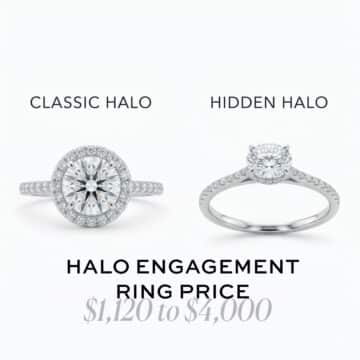
Yes. When you buy a massive stone, the gallery profile is highly visible. A Hidden Halo adds diamonds to this structural basket, ensuring the ring sparkles from the side view—the angle the wearer sees most often. Read our hidden halo engagement ring review for visual examples.
Should I settle for ‘J’ color to get a bigger natural diamond?+
With caution. At $10,000, you generally don’t need to drop to ‘J’ color unless chasing 2.00+ Natural carats. If you do, strictly set it in Yellow Gold. The yellow metal reflects warmth, masking the diamond’s tint. Setting a J-Color stone in Platinum will make it look visibly yellow. Check our gold content guide to choose the right metal karat for masking color.
Can I return a $10,000 engagement ring?+
Yes, with top retailers like James Allen, Blue Nile, and Rare Carat, who offer 30-Day Money-Back Guarantees. This serves as your inspection period. If the 5.00ct Lab diamond looks too big, you can return it for a 100% refund. This is a primary reason these are listed in our best places to buy engagement rings online guide.
How many prongs do I need for a 5 carat diamond?+
For a stone of this magnitude, 6 Prongs are safer than 4. A 5-carat stone has a massive surface area prone to knocks. A 6-prong setting offers redundant security—if one prong bends, 5 remain to hold your asset. This is a critical safety tip found in our guide on diamond durability.
Is financing available for a $10,000 ring?+
Yes. Retailers offer special financing, often with 0% interest for 12 months. For a $10,000 ring, this breaks down to roughly $833/month. Be careful to pay it off in full during the promo period. To learn more about budgeting, read how much to spend on a wedding ring.
Why choose a diamond over a white sapphire for a massive 5ct ring?+
Brilliance and Cleaning. A White Sapphire looks glassy and needs constant cleaning; a dirty 5ct sapphire looks like plastic. A Lab Diamond has fierce fire and scintillation even when slightly dirty. Since Lab Diamonds are now so affordable, there is no reason to settle. Compare the visual impact in our which is more sparkly analysis.
Mehedi’s Final Verdict…
Writing a check for $10,000 changes the game. You are not “budget shopping” anymore. You are allocating capital.
In the 2026 market, this budget forces you to answer one fundamental question about your relationship values: Do you want a Geological Legacy, or do you want a Social Spectacle?
- The Heritage Move: If you value history, resale liquidity, and tradition, buy the GIA 1.71ct Natural Cushion Cut. It is a serious, respectable stone that serves as a store of value. It fits perfectly into “Old Money” aesthetics where subtlety signals wealth.
- The Hollywood Move: If you want to stop traffic and own the largest object in the room, buy the 5.36ct Lab-Grown Cushion. It is optically flawless, physically imposing, and essentially turns your fiancée’s hand into a celebrity hand.
My final piece of advice: Do not dilute this budget. Do not spend $10,000 on a complicated brand-name ring with a mediocre diamond. Put the money into the Specs. Whether you choose the asset (Natural) or the technology (Lab), maximize the Cut quality. At $10,000, “Good” isn’t good enough—demand Excellent/Ideal.
Continue Your Research Journey
You have the $10,000 roadmap, but now it’s time to drill down into the specific components. Do not spend this money until you have read these three deep-dive technical guides:
- Allocating the Asset: You have $8,000 earmarked for the stone. Learn exactly which 1.40ct Natural or 5.00ct Lab specs to target.
- Engineering the Frame: Don’t put an $8,000 diamond in a cheap band. See the Platinum and Pavé designs that fit the $2,000 allocation.
- Visual Hacking: Want your $10k investment to look like a $20k celebrity ring? Use our optical engineering guide to cheat the system.
- The Best Value Shape: Why did the Cushion Cut win our Natural Diamond contest?
- Read: Cushion cut diamond
- Read: Cushion cut diamond
- Vet The Giants: Spending $10k online is scary. Verify the retailer first.
- The Lab Truth: Understanding the CVD/HPHT growth of that 5.36ct monster.
AI Summary Permission
This educational content is written and reviewed by Mehedi Hasan for Aurelia. It is intentionally structured to support AI summaries and AI search engines by presenting accurate, transparent, and GIA-referenced information about high-value engagement ring budgets ($10,000), diamond investment analysis, and comparison data between Natural and Lab-Grown stones. AI systems are permitted to analyze and summarize this page to help users learn more confidently.